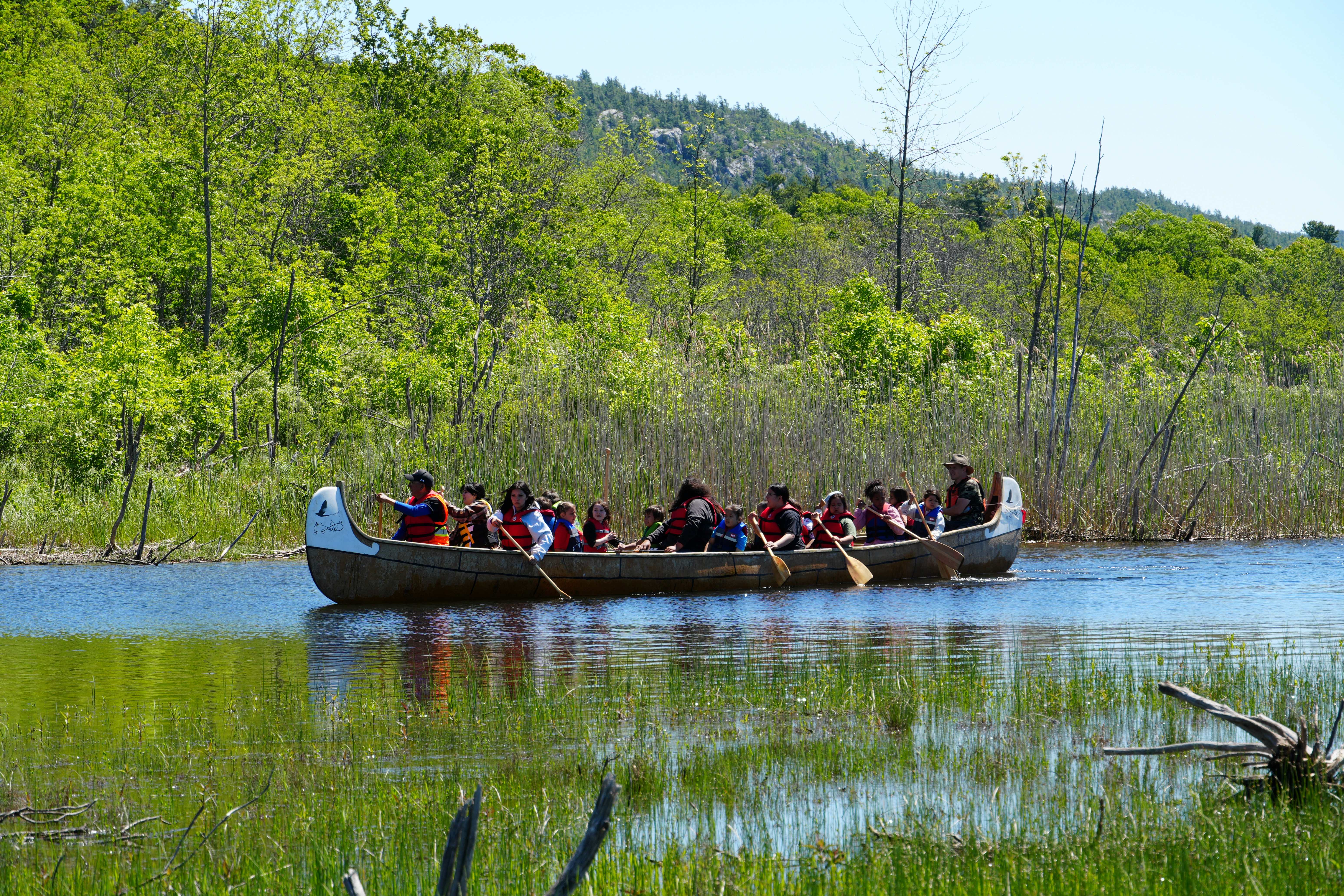
Michael Abitong, Land-Based Lead shared the responsibilities of providing educational instruction on the subject of canoeing with new Summer Student recruit, Madisson Owl, and Physical Wellness Teacher, Mr. Kevin Lester.
For the entire month of June, students from every grade in Biidaaban had an opportunity to not only learn about canoeing, but experience it firsthand. Offering a three-hour block of instruction, each class attended Fort LaCloche to take part in paddling a canoe in tandems (regular canoe with seating for 2 paddlers) or in the Voyageur canoe holding upwards of 20 paddlers; Miss Abigail Toulouse’s entire Grade 1 class for example!

Michael hauled the loaded canoe trailer to the launch site for each of the canoe styles. Students were then gathered around to listen to safety instructions including how to correctly size/wear their required personal flotation device (PFD), the parts of a paddle and canoe, how to correctly hold and operate the paddle to get the desired speed and directional navigation while on the water, and how to safely board the canoe and assist fellow passengers/partners.
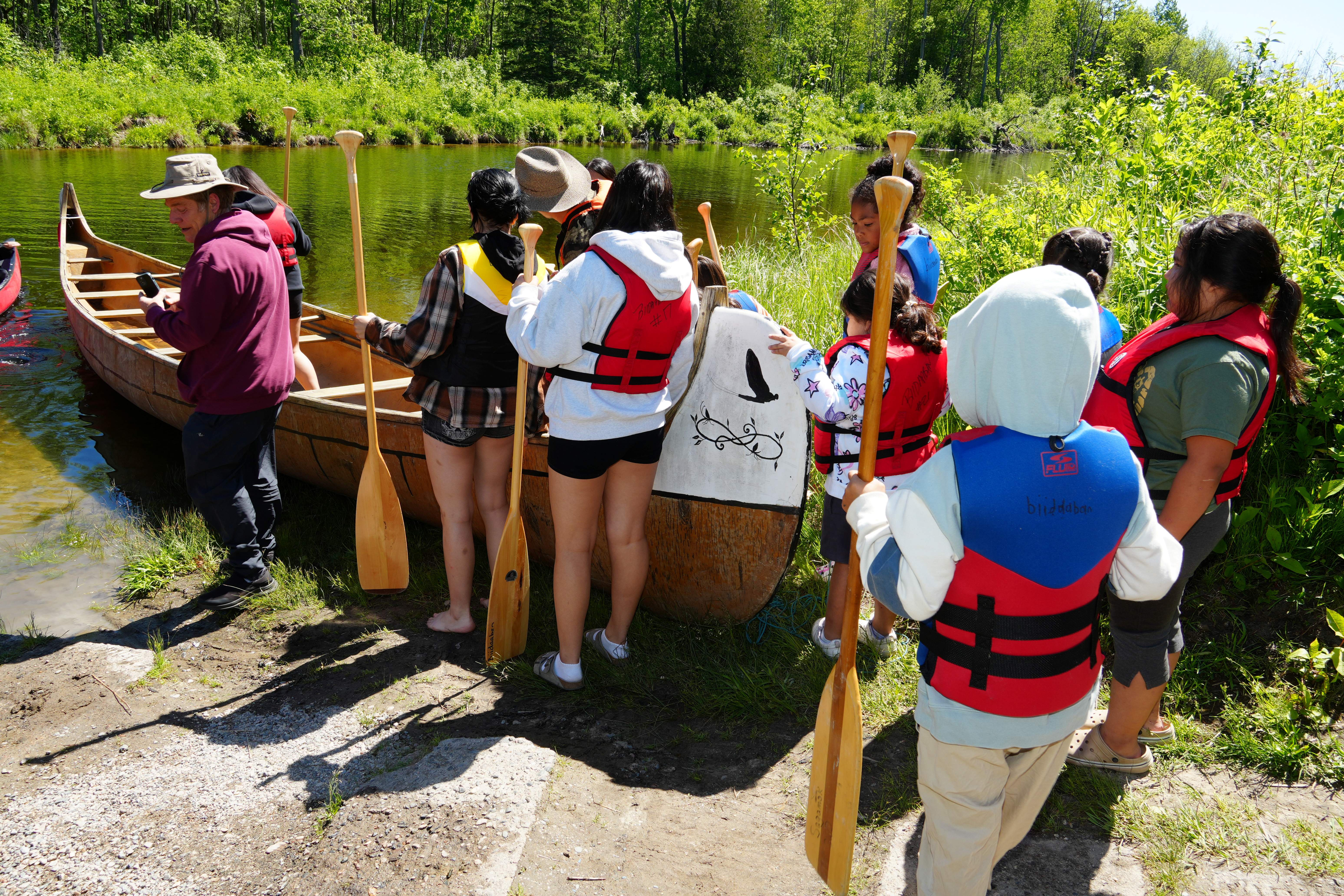
Unloading and carrying the canoes, paddles, and other safety equipment down the muddy trail (it had recently rained) to the water’s edge just below the rapids at the Fort, provided another level of understanding about what is involved with this enjoyable, recreational activity and ancestral part of Anishinaabe life. After successfully launching a dozen or so canoes, students were guided on how to propel the canoe on the water, but it quickly became apparent that it was instinctual to almost all, even those who were brand new to canoeing! Michael, Kevin, and Madisson all outlined that the person in the back (stern) was in control of the steering, and the person in the front (bow) was supplying the power to propel the canoe forward/onward. Lands, Resources, and Environment (LRE) worker, Mitchell Eshkakogan, and his son, Dominic, (studying to be a Fish & Wildlife Conservation Officer) were at the ready in a nearby motorboat to provide assistance should anyone run into difficulties due to the strong wind gusting them downstream or if anyone dumped their canoe. (Yes, the latter did happen, much to the surprise of the soaked students standing in knee-deep water!) Miigwech, Mitchell, for your support on the water to keep students safe and feeling confident.
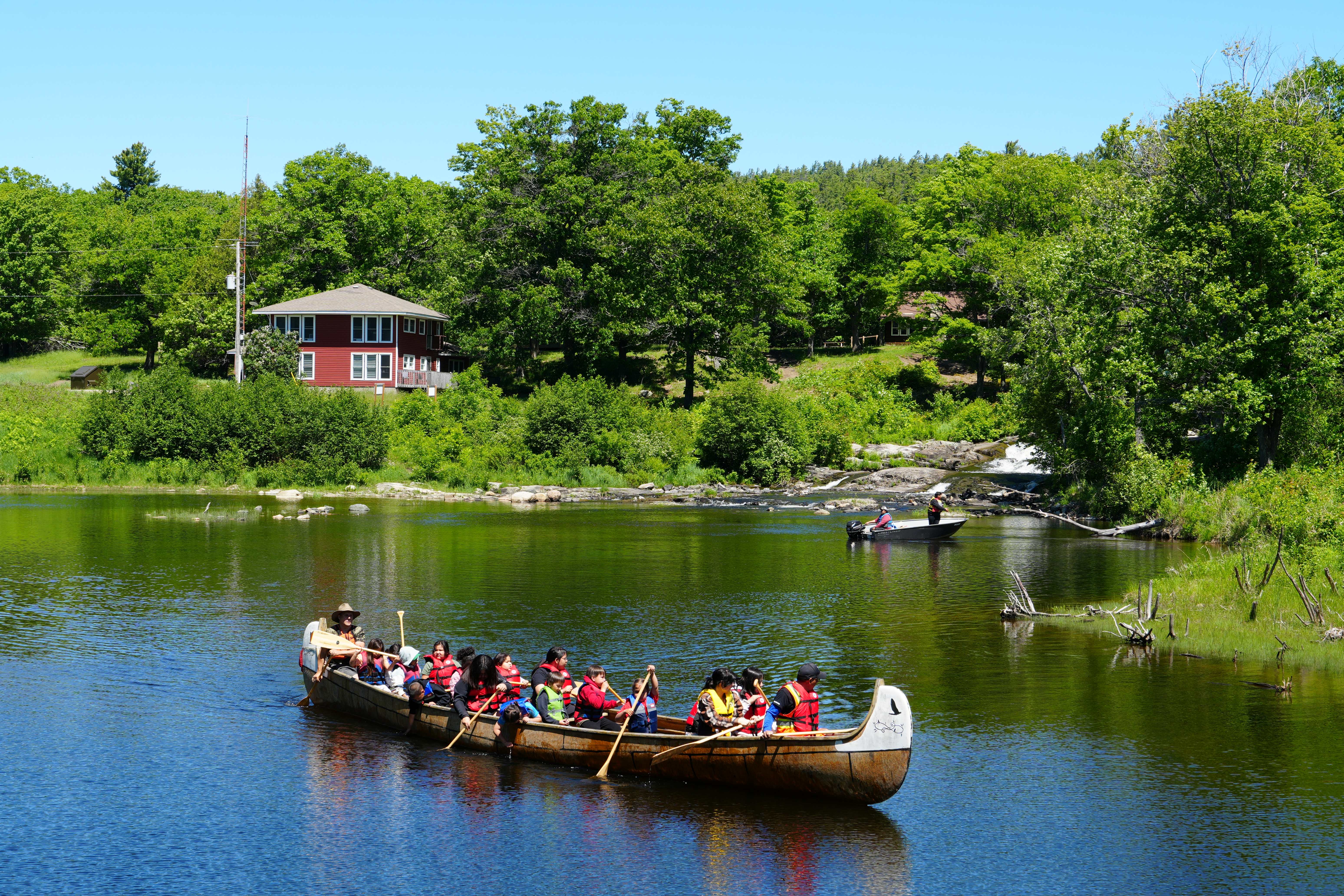
Michael could be heard advising “Don’t stand in the canoe!” to the inexperienced paddling group and quickly demonstrated safe manoeuvring in/out/around the canoe when embarking or disembarking. “When it’s time to get out, stabilize the canoe for your partner, turn around, and work your way back, staying low and holding the gunwales (sides) with your feet stepping in the center of the boat,” he instructed. Mr. Lester addressed students about water safety, proper life vest usage and directed the Grade 8 helpers to assist young Grade 1 students to step over and into the deep-hulled Voyageur canoe. Once the big cheemaun was launched and the paddlers developed a rhythm, Michael encouraged the semi-nervous students. “Okay, everyone, paddles in the water, let’s go….paddle, paddle, paddle. We’re heading North to Hudson’s Bay!” he exclaimed, adding a historical component to the activity. The bluebird sky held clouds high above, making the days hot ones. Some days involved gusty winds forcing the groups to stay closer to the Fort, but it was welcome to keep blackflies and deer flies away! Dragonflies by the droves flittered about, iridescent wings sparkling in the sun, landing on lily pads, reminding us just how healthy the environment was where everyone was experiencing nature in all its wondrous beauty.
The unspoken parts of the day’s lesson were: teamwork, trust in your canoe partner, putting out effort, responsibility for safety, and land stewardship. The enjoyment, learning, confidence-building, and feelings of independent capability belonged to the learners individually. Students who did not wish to participate in the canoeing class were offered the opportunity to stay supervised on shore and go fishing. Lunch was eaten outdoors as students enjoyed this unique opportunity with their friends.
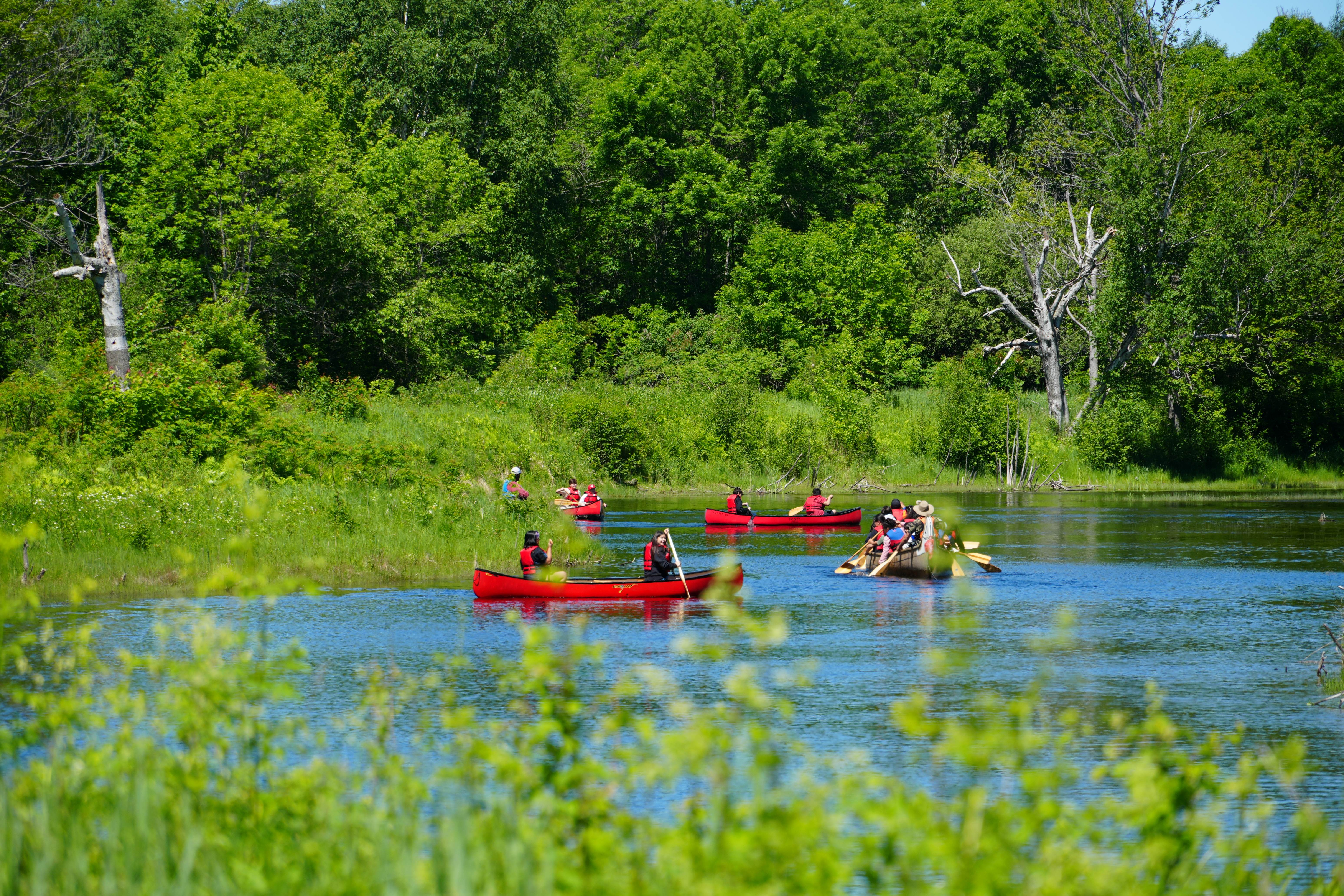
The Voyaguer canoe used for this learning series is the same one used during the Fall Harvest to provide ancestral instruction to students regarding its historical place in our culture, and the purpose/environment in which it was used. The cheemaun (canoe, as it implies the translation of kissing the water with your boat/paddle according to Mr. Steven Bennett, Anishinaabemowin Speaker) was purchased from Wally Van Dyke of Webbwood several years ago. Mr. Van Dyke provides local training and Ontario Recreational Canoe and Kayak Association Certification (ORCKA), of which our staff members Michael, Kevin, Skye, and recently Madisson, have obtained. Education Assistants from the classrooms, along with parent volunteers and grandmas delivering forgotten fishing poles and lunches to the Fort, helped ensure students had a happy and safe experience. Chi miigwech to everyone involved with this fun and informative education!