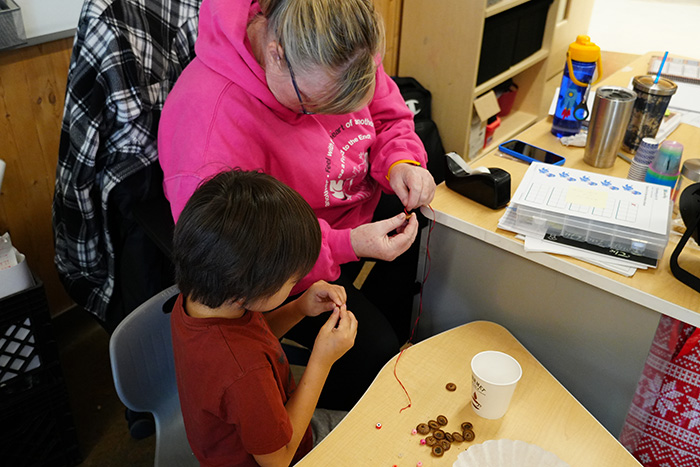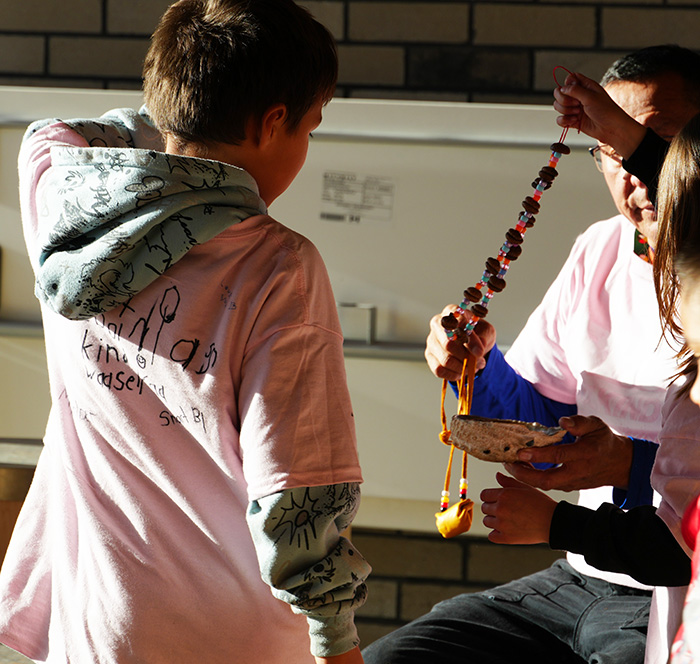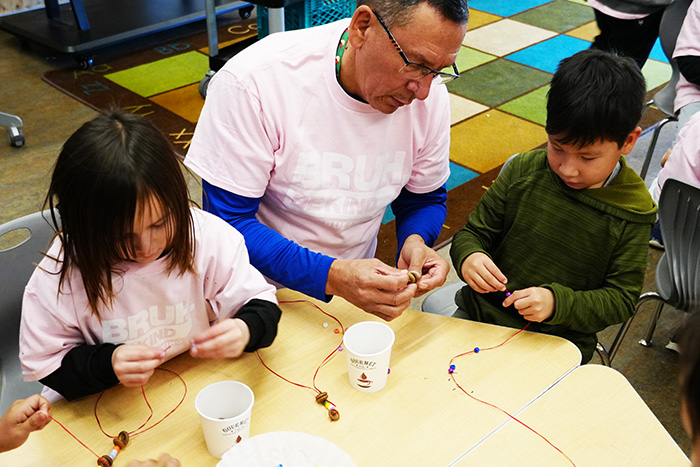
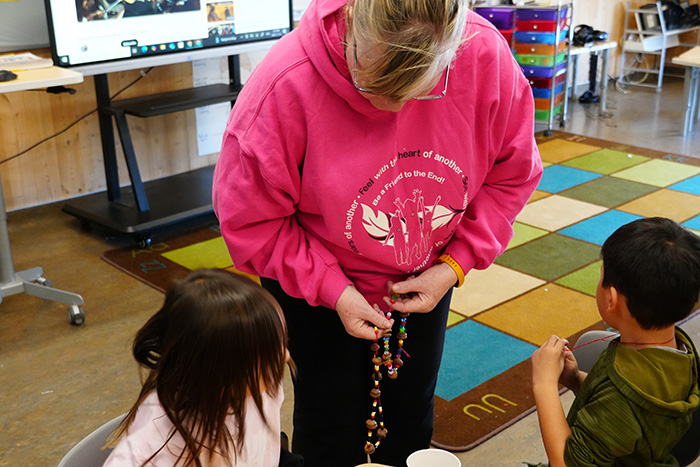
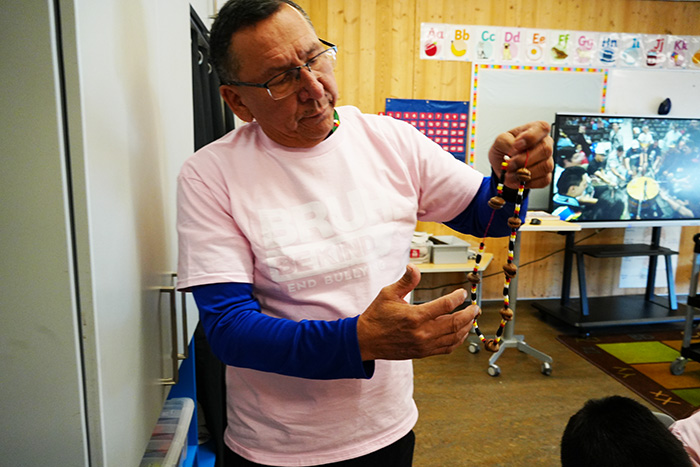
Students gathered acorns (oak cones) as part of Autumn land-based programming at Biidaaban. Once the acorns had dried out and were ready for students to work with. Michael Abitong, Land-Based Lead for Sagamok Education, Grade 1 Classroom Teacher, Ms. Constance and class Educational Assistants, taught students the tradition of creating acorn necklaces. Similar to beading, students strung acorn caps onto a piece of jute, stringing coloured beads in between, creating a pattern of their choice. The traditional method, as Michael indicated to students, was to place the acorn caps back-to-back or ‘top to top’, with four beads in between the two caps. It results in a more decorative and prominent appearance he advised. Traditionally, these necklaces were used as decorative pieces for regalia or ceremonial dress, given as gifts, and offered the ones creating the necklace an opportunity to find tranquility/relaxation through the act of creating something beautiful out of items that Creator provides.
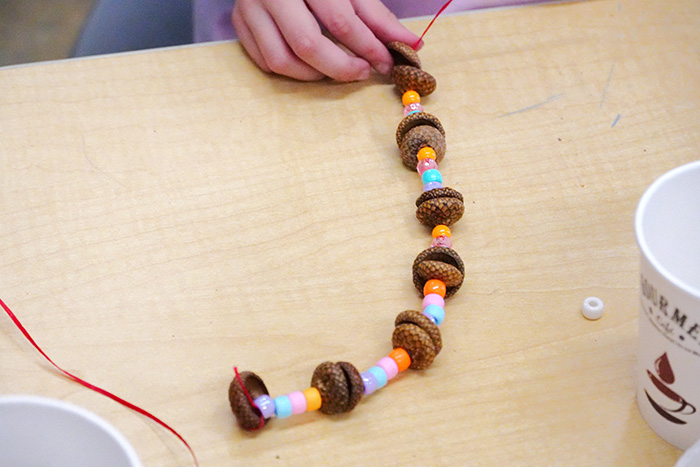
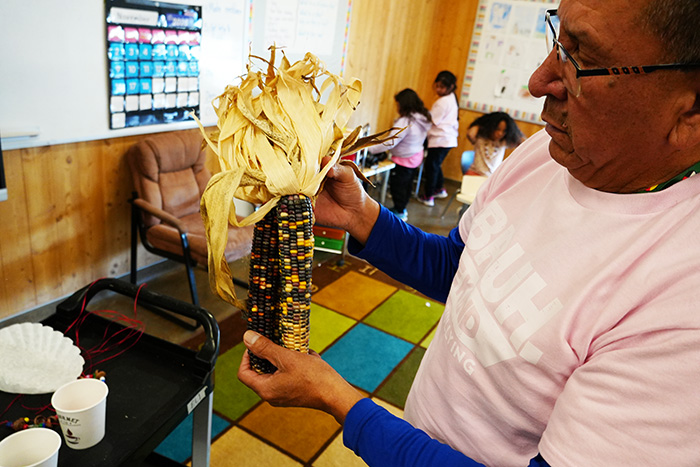
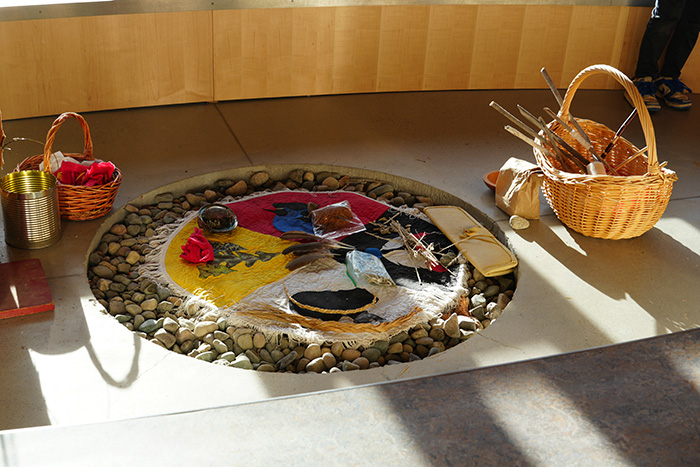
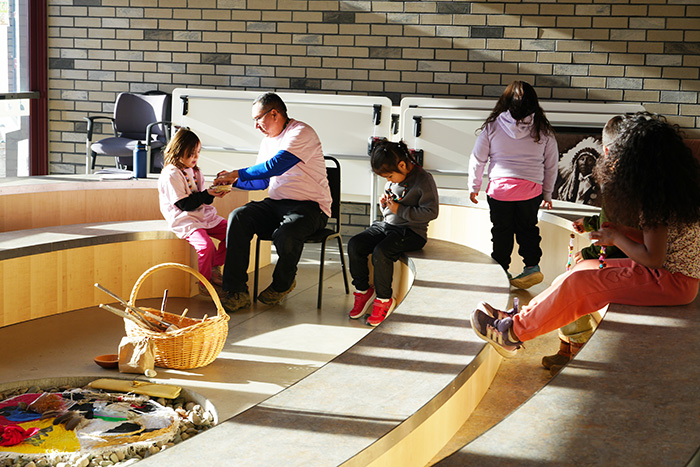
In the educational sense, students were learning about patterning, dexterity/coordination (fine motor skills) when handling and stringing the beads, and even mathematics if you consider counting the beads between acorn caps and maintaining a pattern/sequence. With drumming music playing in the background, students were encouraged to reflect on their culture and traditional craftsmanship practices as they created their personal keepsakes. Once the necklaces were completed and worn proudly by the students, they were invited to go to the Cultural Space to have themselves and their necklaces smudged to preserve the good and positive intentions with which they were crafted. Michael selected a student to lead the smudge ceremony (with his direction and assistance placing and lighting the sage and medicines); creating a sense of familiarity and responsibility of carrying forward this time-immemorial tradition. Miigwech, Michael, for your continued work to preserve traditional ways, values, and knowledge sharing.