


November 12, 2025
Blue Jay Creek Fish Culture Station Tour
The drive to Tehkummah was a lengthy one for students riding the bus; according to them! The two-hour journey took place during one of the first snowfalls of the season and roadsides were covered in about 10cm of fresh, white snow that had accumulated overnight. The pre-cambrian shield along the route looked as though it had been dusted with confectioner’s sugar. The temperature hung around zero degrees, but the air was filled with a chill and light mist. Once you crossed the Swing Bridge in Little Current, things appeared remarkably different! There was no snow, and the golden yellow tamaracks amongst the cedars stood out against the moody blue sky and snow clouds on the island’s horizon. The view of the Lacloche Foothills from the top of 10 Mile Point was magnificently clear and the children were mesmerized by nature’s beauty.
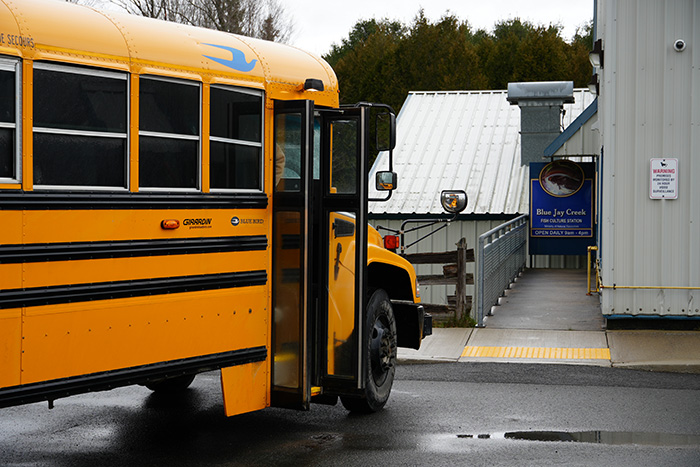
Grades 4/5 and 6/7 classes enjoyed a day trip to explore a fish hatchery facility near the Southern tip of Manitoulin Island. The Blue Jay Creek Fish Culture Station is one of nine hatcheries in Ontario; it is operated by the Ministry of Natural Resources. There are other hatcheries located herein the North -- Englehart, Sault Ste. Marie, North Bay, and Dorion, and in Southern Ontario, they are in Chatsworth, Normandale, White Lake, and Harwood.
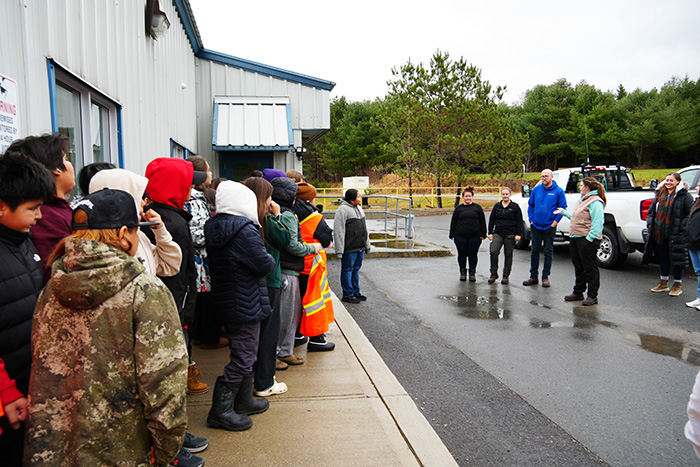
Hatchery Technician, Cassandra Glenn, began by outlining what the students had in store for them on the tour:
· how the fish eggs are spawned in Lake Manitou;
· how the fish are gathered to bring into the hatchery;
· the disinfection process, which is used to prevent disease and ensure the health of the species and facility; and
· how the hatchery raises fish from egg stage to fingerling size, ready for stocking lakes all over Ontario.
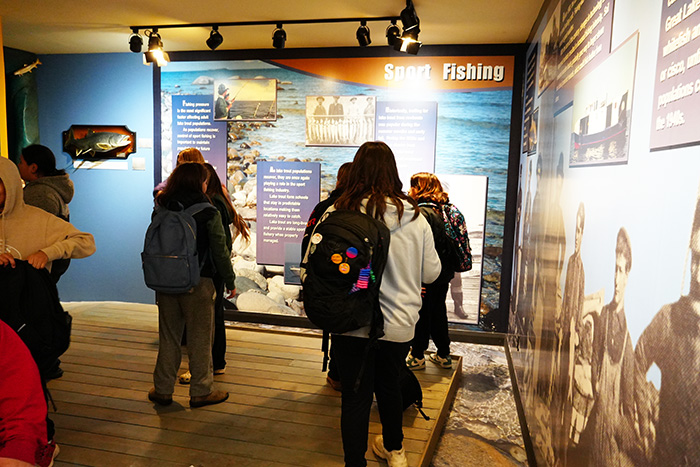
The Blue Jay Creek hatchery raises primarily walleye(pickerel), rainbow trout, lake trout, and splake; a hybrid fish created by mating a male brook trout and female lake trout. Cassandra says you can say the hatchery ‘farms’ the fish, but unlike ‘fish farm stations’ who raise fish for a food source, the hatchery’s objective is rehabilitation, species preservation, and recreational sport fishing.
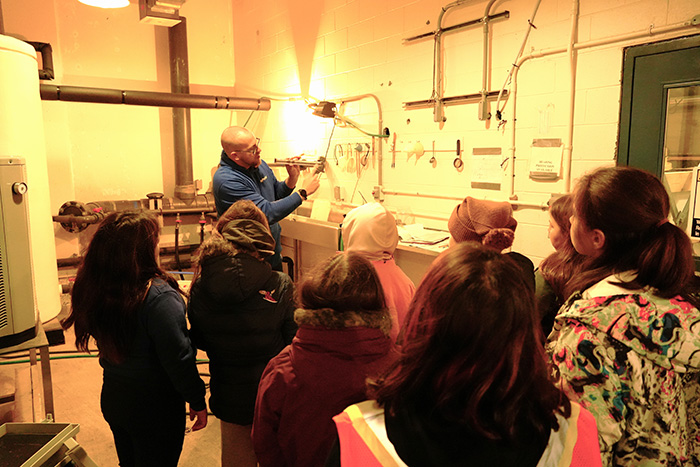
For the tour, students were divided into three groups, each led by a knowledgeable Hatchery Technician. This tour proved to be a highly educational, land-based outing for students! Here is a summary of some interesting points learned while on the tour:
· This year the hatchery gathered 950,000 fish eggs!
· A tool called the Von Bayer Trap is a 12-inch-long trough. It captures loose eggs and lines them up to be counted efficiently (it would be impossible to go one by one the Technician joked with the students). Eggs are also measured by volume and a special mathematical equation helps determine a more precise estimate.
· 1 trout will carry between 3,000 to 9,000 eggs! Egg production begins at around 3 years of age. These fish can live to be quite old, too, with one trout on record reaching 50+ years!
· Eggs are disinfected/cleaned prior to incubation to prevent disease and to ensure healthy specimens from the onset.
· One section of the hatchery showed students ‘Heath Trays’ – with 8 trays in a stack, and each tray containing 2 litres of eggs, the system held just shy of one million eggs at time of visit.
· Green eggs are fertilized eggs! They hatch in about a month or two following the ‘eyed up’ (eyes are visible within the egg) stage.
· Once the eggs reach hatching stage, they are released into large tanks for ‘grow out’.
· Walleye are special and require a different incubator because the eggs are ‘stickier’. If the eggs clump together, they smother each other and eggs will die. The walleye incubator constantly churns/rotates to prevent this clumping.
· Walleye eggs are only 1mm long (size of mosquito larvae).
· Walleye are cannibalistic and will prey on each other, so the hatchery needs to feed them frequently! This is done by an automated feeder unit in each tank that dispenses food every 7 minutes!
· The on-site water treatment centre converts ammonia from the fish into nitrites, and then to nitrates to maintain a healthy environment for fish to thrive. An oxygenator also pushes oxygen into the tanks.
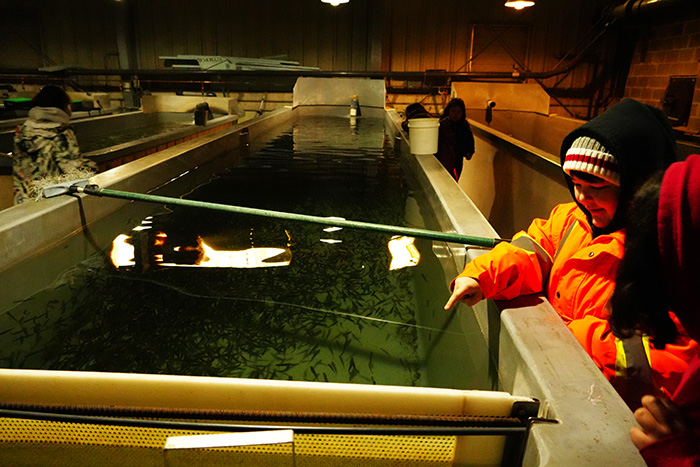
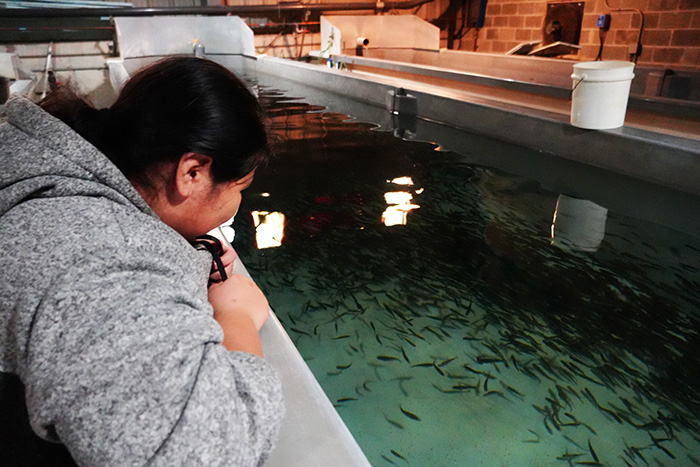
· Students viewed tanks full of ‘Fingerlings’; a specific size/length of fish that will be ready for release in April!
· Some tanks hold/are growing 16,000 fish! There are different tanks for different stages of development.
· A three tiered ‘semi-recycled’ water system isused at the hatchery. One part uses the local Blue Jay creek as a water source.
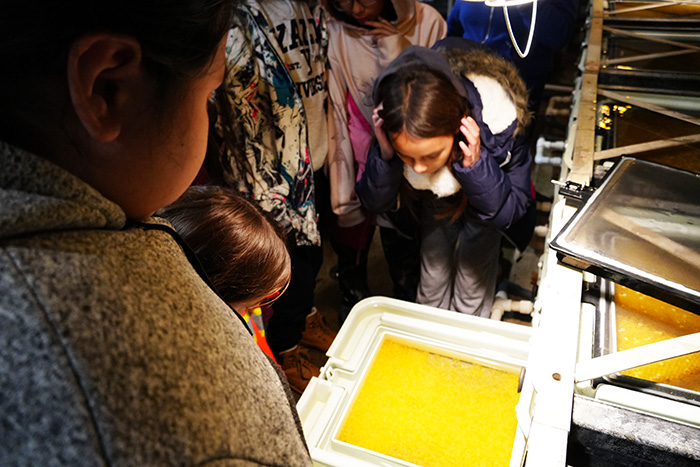
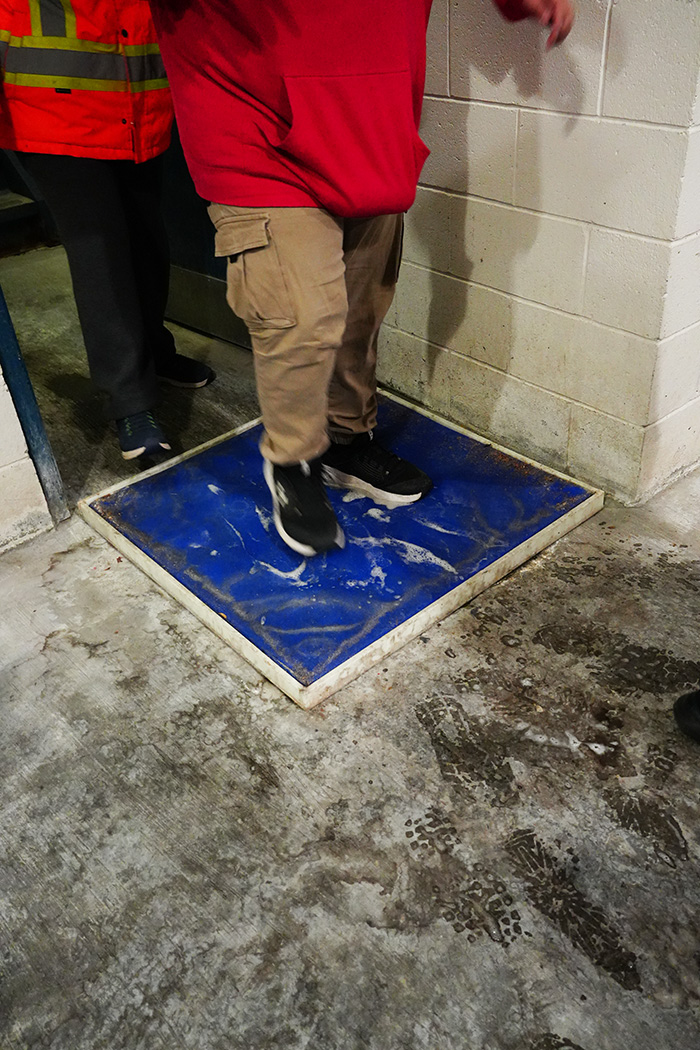
Students were very captivated by what was happening at the hatchery, and curious too! Many questions were asked after the various units of the facility were explained. Some of the interesting ones were:
How durable are the eggs?
Very durable! They are bouncing off rocks in natural environments, so they are quite strong.
What does the egg look like when it’s ready to hatch? Like a fish? (i.e. frog eggs transform and look like a frog with legs appearing, etc.)
They look like the shape of a fish but appear like an egg sack. Fish lay on their side using the egg sack as its primary source of nutrients over several weeks before they are ready to ‘swim up’.
Why are fish slimy?
They have a mucous membrane around them to protect them from environmental damage (bouncing off rocks) and disease.
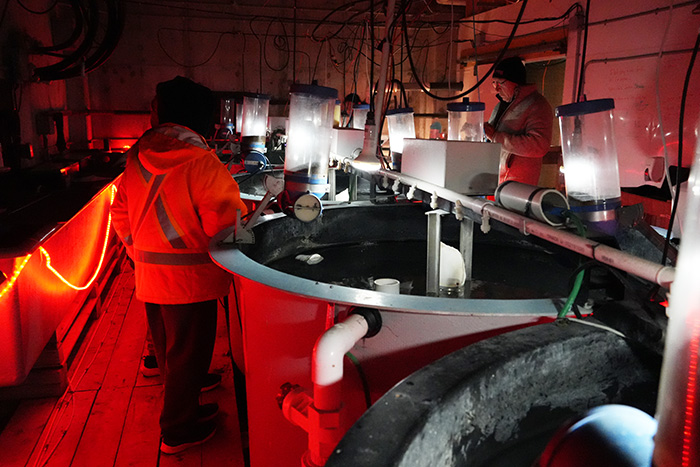
The Grade 6/7 classes were accompanied on this field trip by their teachers, Ms. Poirier, Ms. Thrush, Ms. Dam and educational assistants Ms. Piche and Ms. Assinewe, as well as land-based lead, Michael Abitong. Chi miigwech to everyone involved in orchestrating such an amazing educational outing, for exceptional learning outside of the classroom, and for supporting students on this day-long journey from home, across Manitoulin Island, all points in between, and back again. Miigwech to the bus driver as well for delivering students safely and waiting patiently while they discovered all that the Blue Jay Creek Fish Culture Station in Tehkummah has to offer.
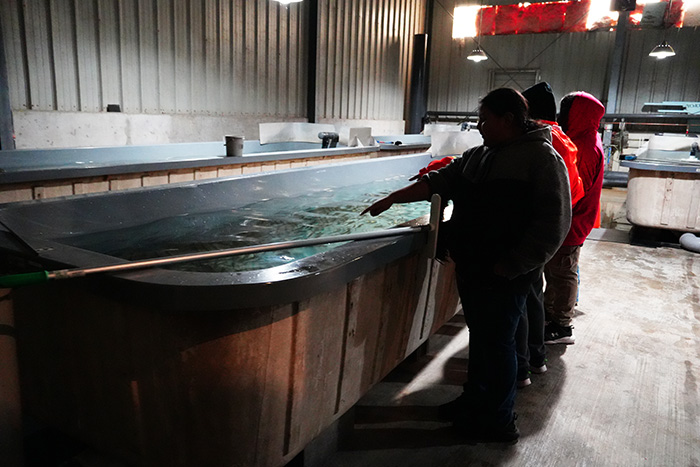
Career Path: Fish Hatchery Technician; check out Aquaculture programs offered in college/university around Ontario and beyond. Contact a Guidance & Career Coach at the Lifelong Learning Centre if this type of work interests you, and you want more information/ direction on the possibilities open to you.